![The Buddhist Centre [Live]](https://thebuddhistcentre.com/stories/toolkit/wp-content/themes/TBCO-Sites/images/logo.png)

CROSSING THE STREAM: THE LIFE AND LEGACY OF SANGHARAKSHITA
Meditation, dialogue, storytelling, and contemplation to explore the life and teachings of Triratna's founder with Parami and Nagapriya Watch practice sessionsDonate and support Home RetreatsWhat is a Home Retreat? (click to read)
Home Retreats can be tailored to your needs.
We provide:
- Live Home Retreat events daily
- Specially curated Dharma resources
- A chance to catch up each day on the event sessions by video if you missed them – so you can do the retreat in your own time
- Share your own inspiration and reflections on the private retreat Padlet space (shared by email)
- A chance to connect with the retreat leader to ask questions about your practice
Whether you have the time to engage with a full-on, urban-retreat style week at home – or are super occupied already with kids or work and just want some useful structure to book-end your days with a little calm and inspiration: this is for you.
Join us for five days of practice, dialogue, storytelling and contemplation as we explore the life and teachings of Sangharakshita, the founding teacher of the Triratna Buddhist Community. Through talks, meditation and discussion we will trace how one man’s journey—from post-war Britain to the foothills of the Himalayas—helped ignite a global movement grounded in the Buddha’s teachings.
This home retreat offers a rich opportunity to engage with Sangharakshita from multiple perspectives: his life story, influential writings, distinctive teachings, contribution to the revival of Buddhism in India, and his poetry.
RE-WATCH THE SANGHARAKSHITA 100 ONLINE FESTIVAL: ‘CELEBRATING SANGHARAKSHITA
All our events are offered by donation. If you can, donate to allow others who can’t afford it to access these vital Dharma resources when they need them most. Thank you!
Suggested donation:
£175 / $230 / €205 for the whole retreat, or drop in for £30 / $40 / €35 per day.
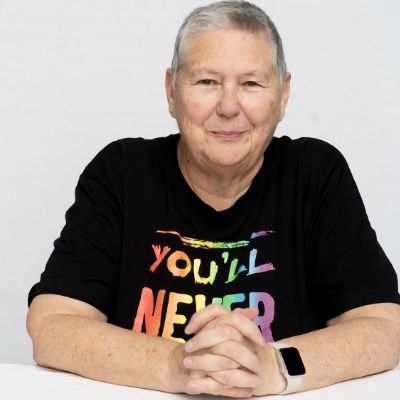

Nagapriya has taught Buddhism and meditation in many different contexts both in Europe and Latin America. He ran into Buddhism in the late 1980s in Leeds, England, where he studied philosophy. In 1992 he was ordained as a Dharmachari (“Dharma Farer”) in the Triratna Buddhist Order.
After working several years on Triratna projects, he completed a master’s degree in the history of religions in 2004 and then a postgraduate degree in pedagogy. Since 2013, Nagapriya has been living in Mexico where he co-founded the Cuernavaca Buddhist Center and was its first director. He is also co-founder and director of Dharmamegha Editorial, which publishes Buddhist books for the Spanish-speaking world.
In addition, he is one of those responsible for training people to enter the Triratna Buddhist Order in Latin America and is a member of the College of Public Preceptors. He is known for his sense of humor, his curiosity about the Dharma and his clarity of thought.
Nagapriya is the author of ‘Exploring Karma and Rebirth’, ‘Visions of Mahayana Buddhism’, ‘Ver Con Los Ojos Del Buddha’ and ‘The Promise of a Sacred World: Shinran’s Teaching of Other Power’.
Welcome to the retreat
Day 1
watch the Live PRACTICE sessions
Parami starts off this Home Retreat by introducing the theme and saying a few words about Sangharakshita and his Complete Works. She also reads from the foreword to Volume 7, ‘Crossing The Stream: India Writings I’, which features Nagabodhi talking about seeing Sangharakshita’s body after his death.
Then we are into the dedication ceremony, setting our intention for the retreat and five days of shared practice. This is followed by a 20 minute open period of meditation.
Following some time in discussion groups, we hear from a few participants sharing some initial reflections. And there is the chance to watch and reflect on an extract from an interview with Sangharakshita talking about the happiest and saddest experiences in his life.
The session concludes with the chanting of the Shakyamuni mantra.
A brief settling meditation leads into a conversation with Parami and Nagapriya on why this retreat invites a fresh encounter with Sangharakshita (Bhante)—including the mixed, evolving nature of discipleship. Nagapriya shares personal moments from Mexico (a joyful 2018 meeting with Bhante Sangharakshita; Day-of-the-Dead tributes after his death) and encourages us to meet with Sangharakshita now through imagination, study, and shared memory.
Writer Nagabodhi then read vivid passages tracing Sangharakshita own Buddhist journey: Calcutta and the Mahabodhi Society amid riots; retreat at Arunachala with Ramana Maharshi and a vision of Amitābha; Dr. B. R. Ambedkar’s conversions and Bhante’s Nagpur address; and founding the FWBO/Triratna to transmit Buddhism in the West. Along the way, we also hear from Nagabodhi’s book ‘Jai Bhim’, and his recent short biography ‘Sangharakshita: The Boy, the Monk, the Man’. There are excerpts too from Sangharakshita’s memoirs ‘The Thousand-Petalled Lotus’, ‘The Rainbow Road’, ‘In the Sign of the Golden Wheel’; and from his talk ‘The Jewel in the Lotus’ on the mantra Om Mani Padme Hum, the Diamond Sutra, and Ambedkar’s Twenty-Two Vows.
We settle in for the final session of the day with a brief grounding practice—body awareness, a few deeper breaths, and waves of mettā to fellow retreatants across the world. Then there is space for honest, kind discussion focused on our personal relationship to Sangharakshita, working with complexity and sexual ethics, and how different cultures meet a teacher.
The session closes in ritual and contemplation: a short sit, Sangharakshita’s poem “Meditation,” and the Threefold Pūjā (in its original cadence), followed by chanting the Refuges and Precepts, and the Śākyamuni mantra accompanied by images of Adhiṣṭhāna, the place where Sangharakshita spent his last years.
Day 2
watch the Live PRACTICE sessions
Day two begins with a brief period of meditation to settle in before moving into the Morning Puja, which includes the Refuges and Precepts, as well as evocation of the Brahma Viharas.
We then move into another period of meditation, a practice of your choice. Afterwards we have a conversation between Parami and Dayanandi, where they discuss Dayanandi’s first encounters with the Triratna movement and Sangharakshita himself. They then talk about Dayanandi’s ongoing project, writing a book about Sangharakshita’s eight main teachers.
Today’s session begins with an excellent Dharma talk by Parami on the Six Emphases of Triratna. Her reflections begin with some observations about the 1960s as the period in which Triratna was founded, focussing particularly on her generation’s assumptions around the notion of “progress” and whether or not it is guaranteed in society and within human history. She brings in Sangharakshita’s perspective from his talk ‘Looking Ahead A Little Way’ that Buddhism as a particular expression of the Dharma (like any other phenomenon in reality) would rise and fall like waves on the ocean; and that the community he founded is part of the latest wave and has some particular distinguishing characteristics.
Sangharakshita’s Bodhisattva ordination would have been informed by Asanga’s precept that “It would be a bad thing not to form a community”. The six distinctive emphases, as clarified in his original talk and then subsequently in 2007, help us understand his approach to that work. Parami’s own take on this set of qualities is a refreshing update on their relevance in contemporary society.
Follwing the talk we hear from some of the retreatants on their responses to Parami’s talk and this aspect of Sangharakshita’s legacy.
The Six Distinctive Emphases of Triratna
The Centrality of Going for Refuge to the Three Jewels
Unified – not “unisex”
Ecumenical (within the Buddhist tradition)
Spiritual Friendship
Right Livelihood
The spiritual value of the Arts (and Sciences)
We begin today’s final session with a brief meditation centred on our experience of gratitude. Then Nagapriya gives a talk on Sangharakshita’s paper ‘Forty-three Years Ago’ exploring the history of his original bikkhu ordination and the meaningful basis of Buddhist practice, especially as things changed over the decades leading to the foundation of Triratna (FWBO). Nagapriya particularly explores Sangharakshita’s relationship to betrayal and the image of the scapegoat—opening up the opportunities contained within such painful experiences.
In the second half of the session we hear some questions and reflections around the talk, then close with a beautiful ritual exploring the guru Padmasambhava, one of the key figures for Sangharakshita in his own practice life. We end the day with a beautiful invocation chanted by Kusaladevi.
Day 3
watch the Live PRACTICE sessions
We begin with the Session One Pūjā (call-and-response; text originating with Viveka (USA) and refined by Vessantara & Vijayamālā), then chant the Refuges & Precepts in Pāli and the five training principles in English, closing the ritual section with verses on the Brahmavihāras. We settle into a 30-minute open meditation, practising in whatever way feels most alive, with a broad, kindly awareness.
After a short break, we turn to Bhante’s influence in India. We set the scene with a snapshot of our Indian Sangha, then listen to a 2013 Buddhist Voices podcast: Candradasa and Vasikā (Paris) interview Dhammacāriṇī Jñanaśūrī (in Marathi, with translation). She recalls attending the 1956 Nagpur mass conversions led by Dr. B. R. Ambedkar under Mahāsthavira U Chandramani; the poverty and resolve that brought crowds to Nagpur; taking the Twenty-Two Vows; facing caste backlash back home and at school; the immense public grief at Ambedkar’s death and Sangharakshita’s rickshaw address in Kasturchand Park; and her own resolve to educate children—and later to teach mettā bhāvanā even while imprisoned.
We open the floor for reflections, including a moving contribution from Dhammachari Chandravajra (Mumbai) on growing up in a slum, finding support through Karuna Trust hostels, meeting the Sangha, and ordination, alongside present-day funding challenges for India projects. We close by chanting the Śākyamuni mantra (India style) — “Muni Muni Mahāmuni Śākyamuni Sādhu” — as a shared dedication.
We welcome Yashosagar (Pune) and Shraddhavajri (Mainpuri, U.P.). A short photo slideshow traces Bhante’s early years in India, the first Indian ordinations, the growth of retreat centres and hostels, and women’s communities.
The conversation turns to Dr. B. R. Ambedkar—his constitutional work, social vision, and the 1956 Nagpur mass conversion—and to his three meetings with Sangharakshita. We hear how Bhante’s impromptu condolence talks in Nagpur steady the movement after Ambedkar’s death, and how “Ambedkarite Buddhism” shapes Triratna’s ethos. Shradavadri explains the greeting “Jai Bhim” as a living pledge to equality, fraternity, and human dignity.
We map Triratna’s spread since the late 1970s—Maharashtra outward to Gujarat, Chhattisgarh, Odisha, Delhi, Punjab, Rajasthan, Haryana, Bihar, South India—with training pathways (mitra, GFR, ordination teams), ongoing community conversions, and women’s leadership. Q&A explores outreach in slums, education and livelihood projects, current funding and policy constraints, lived experiences of caste and gender discrimination, and efforts to engage wider constituencies (professionals, students, tribal communities).
We pause for a brief reflective sit, then close together by chanting the Śākyamuni mantra (India style) — “Muni Muni Mahāmuni Śākyamuni Sādhu” — dedicating the session to a Dharma that transforms personal practice and social life.
In this session, we keep things spacious: brief breakout groups and then we reconvene for a short share-back, where many voice inspiration and emotion from the India focus. Nagapriya then introduces the idea of a supra-/impersonal spiritual influence and reads Sangharakshita’s Nagpur account from In the Sign of the Golden Wheel, highlighting service beyond self. After a short break, Parami turns to the Bodhisattva ideal and Avalokiteśvara as our order’s symbol, linking Amitābha (vision), Avalokiteśvara (community), and Padmasambhava (transformative action).
We close in ritual: listening to the Avalokiteśvara mantra, with the option to make offerings, and depart in silence.
Day 4
watch the Live PRACTICE sessions
The first half of the session begins just as previous days have, with the Morning Puja verses, which include the refuges and precepts, as well as the Brahma Vihara verses. Followed by an open period of meditation.
After the break, Parami explores Sangharakshita’s inner creative life, particularly his poetry and writing, and how these sometimes came into conflict with his life as a scholarly monk living in India. We hear that several of his poems include ‘The Bodhisattva’s Reply’ and ‘The Lotus of Compassion’, as well as some of Sangharakshita’s own writing about how he experienced this conflict between Sangharakshita 1 and Sangharakshita 2.
In this session, we turn to “Sangharakshita One”—the poet and dreamer—and watch a pre-recorded interview in which Parami invites Vishvapani to open up themes from Reimagining Buddhism. We explore Bante’s imaginative way of teaching the path: vision and transformation working together; the path as organic growth and unfoldment (spiral conditionality); and the dynamic between transcendence and immanence, illustrated through his 1947 poem “Immensity.” Padmasambhava, archetype, myth and symbol come to the fore as living means of practice, and the path is framed as both pragmatic and “magical”—suffused with inspiration even as it asks for down-to-earth effort.
After a short break, Nagapriya hosts group reflections. We consider which “myths” of practice speak to us—development, self-surrender, self-discovery—alongside further framings like correspondence and enactment. We share images and metaphors that animate our Dharma life, and touch on Bodhicitta, the Sevenfold Puja, and sadhana as ways of opening to something beyond the narrow self. We close by trailing the next session with Sadanandi, who reads Bante’s poems and reflects on her relationship with him.
A warm, reflective session of the home retreat: Nagapriya hosts Saddhanandi for an intimate portrait of Sangharakshita (“Bhante”) through story and poem. Saddhanandi recalls first encountering his “words of power,” the ritual gift of a Maori greenstone, and a tender improvised “café” for her birthday—moments that reveal his courtesy, attentiveness, and playful care. She traces how poet and Dharma teacher interweave in his communication, and how his exacting language aimed to penetrate, not just explain.
Together they sit with two poems—“The Bodhisattva’s Reply” and “Advent”—opening themes of compassion, preparation, awe, and fear, and touching on Ambedkar’s catalytic role. Late-life emails show Bhante still arranging to meet and teach days before his death. In Q&A, links to the Romantics surface, along with the question of whether he was the “right shape” to found a movement—arriving at the enduring power of vision, kindness, and simply living alongside others while holding the Dharma view.
Day 5
watch the Live PRACTICE sessions
The first half of the session begins just as previous days have, with the Morning Puja verses, which include the refuges and precepts, as well as the Brahma Vihara verses. Followed by an open period of meditation.
After the break, the session focuses on Triratna’s history with Parami giving an overview of the movement’s history as well as the various institutions like the College of Public Preceptors and the chairs’ assembly. She also talks about her own experience of being ordained in the 80s and being involved within these institutions.
The session turns from Bhante’s life to his legacy: Parami recaps Triratna’s structures (the College of Public Preceptors and the International Council) and the importance of an international, multilingual community. A panel—Dhammadinna, Mahamati (chair of Public Preceptors), Subhadramati, Nagapriya, and Vajratara—shares first encounters: reel-to-reel “Eightfold Path” talks and “The Meaning of Spiritual Community”, hitchhiking to hear “Transformation of Life and World” on the *Sutra of Golden Light*, LBC lunches that reveal Bhante’s graciousness, and being moved to tears by the cassette lectures while reading *The Three Jewels*. “Buddhism, World Peace and Nuclear War” gets a nod, as does “Looking Ahead a Little Way”, with the Refuge Tree image hovering in the background as a living symbol.
They then trace how the College evolves—five to eleven to a wave of twelve (2004)—and how consultation replaces simple appointment as Bhante hands his residual responsibilities to the College in 2000 (the “headship” metaphor clarified as responsibility, not hierarchy). Public ordination is the center, but its implications ripple outward: safeguarding understanding of ordination and lineage, appointing and training private preceptors, presidencies and centers, ethics work, and study. Stories span Mexico gaining its own public preceptors, lockdown-era ordinations improvised across living rooms and gardens, and the joy of accompanying new Order members into leadership. Throughout, the tone stays kalyāṇamitrata—care, love, and friendship—plus practicalities (deputy chairs, lively meetings) and honest questions from practitioners about connection and support.
Our final session is rooted in some moving, spontaneous rejoicing in the retreat itself – and for all the work Sangharakshita put into building a spiritual communtiy for the times. Much gratitude to Nagapriya and Parami for weaving such a rich tapestry of Dharma talks, stories, conversation with friends and inspiring readings from the life and teachings of Triratna’s founder.
Fittingly, we close with the same short ritual with which we opened the retreat: a threefiold puja, this time including the positive precepts in many languages. And the beautiful mantra of Green Tara, the great bodhisattva who guides and protects the sangha.
Everything we offer is by donation – give today and help us keep it free for everyone!
We hope you find the Home Retreat helpful. We are committed to providing excellent Dharma resources and spaces to connect with community online and go deeper in your practice. And to keeping this free to access for anyone who needs it! If you can, donate and help us reach more people like you.
Make a regular gift and you’ll be supporting Home Retreats through the years ahead.
Thank you from our team and from the online community around the world!
May you be well!
Suggested donation:
£175 / $230 / €205 for the whole retreat, or drop in for £30 / $40 / €35 per day.
Donate online with PayPal

Donate directly with credit or debit card
Other donation methods
If you would like to donate with another payment method (standing order, cheque, bank transfer, etc), please get in touch.
Stay connected to community
Subscribe now to get the Triratna Highlights newsletter and we’ll keep you posted by email on new resources as they become available.
If you prefer to get your inspiration on social media, we’ll be there too: connect with us on Instagram, Facebook, X and YouTube.
With deep thanks to Parami, Nagapriya, Jayadhi, the College of Public Preceptors and the Dharmachakra team for their generosity in setting up the conditions for this retreat, as well as leading live events each day.
Event main image by Triratna Picture Library
Site designed and built by Dharmachakra.