![The Buddhist Centre [Live]](https://thebuddhistcentre.com/stories/toolkit/wp-content/themes/TBCO-Sites/images/logo.png)
UNCONTRIVED MINDFULNESS
A home retreat exploring awareness, acceptance, and wisdom. Watch practice sessionsDonate and support Home RetreatsWhat is a Home Retreat? (click to read)
Home Retreats can be tailored to your needs.
We provide:
- Live Home Retreat events daily
- Specially curated Dharma resources
- A chance to catch up each day on the event sessions by video if you missed them – so you can do the retreat in your own time
- Share your own inspiration and reflections on the private retreat Padlet space (shared by email)
- A chance to connect with the retreat leader to ask questions about your practice
Whether you have the time to engage with a full-on, urban-retreat style week at home – or are super occupied already with kids or work and just want some useful structure to book-end your days with a little calm and inspiration: this is for you.
Awareness is crucial to Insight, but a Dharma perspective is even more important. Without ‘Right View’ informing what we’re aware of, we run the risk of reinforcing ‘wrong views’. Wrong views are naturally present in the unenlightened state, but we can train ourselves to become aware of those ideas and distortions through learning to watch our minds. Mind watching reveals how we are relating to whatever is happening in experience, whether it be a thought, an emotion, or an arising through one of our senses.
We can relate to experience with acceptance, interest, and impartiality. Or we can resist and proliferate around what is happening, seeing a painful state grow before our eyes, feeling that we are seemingly powerless to stop it. All our dukkha; our dis-ease, dissatisfaction and disappointment come from this resistance.
We can see Right View as a ‘curative’ perspective. It helps us see how we cling and how through that clinging we create our own suffering. Mindfulness and Right View give us tools to relate to ourselves in ways that don’t create further suffering for ourselves or others. We have freedom from fixed views and wise attentiveness in the palm of our hands.
There will be talks and led meditations, using the framework of the Satipatthana Sutta, the Buddha’s primary teaching on Mindfulness. We’ll relate the sutta to the aspects of Spiritual Death and Spiritual Receptivity in our Mandala of Practice.
We will meditate using all 4 postures (walking, sitting, standing and lying down). The emphasis is on continuity of awareness outside of formal practice times. You will receive encouragement to stay present to whatever is happening, and whatever is needed, in any moment. This is a receptive and flexible approach to awareness with kindness as an implicit thread running through it, and understanding and wisdom, a potential in every moment.
Vajradevi’s book ‘Uncontrived Mindfulness: ending suffering through attention, curiosity and wisdom’ is available from Windhorse Publications.
All our events are offered by donation. If you can, donate to allow others who can’t afford it to access these vital Dharma resources when they need them most. Thank you!
Suggested donation:
£175 / $230 / €205 for the whole retreat, or drop in for £30 / $40 / €35 per day.
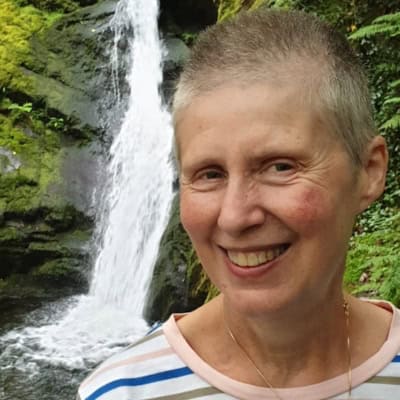
Vajradevi has been meditating since 1985 and has been ordained for almost 30 years. She has been practising and teaching mindfulness with a strong insight dimension for over 20 years. To further her practice she has been on a number of long retreats with specialists on Satipatthana, in Myanmar and the US.
She has spent much of her adult life working in Triratna Right Livelihood settings and between 2000-2007 she helped set up Akashavana, our women’s ordination retreat centre, in Spain.
You can read her meditation blog at www.uncontrivedmindfulness.net
Welcome to the retreat
Day 1
watch the Live PRACTICE sessions
The retreat begins with Vajradevi introducing the central theme of the retreat, which is an approach to mindfulness she has established over the years of practising. She emphasises the value of simply watching the mind.
Before going any further, we move into a period of settling and meditation.
After this, Vajradevi expands further on her sense of what “awareness” means. One interesting point she makes is that “Any object will do” as a focus for mindfulness practice; any arising sensation within experience can be an object of concentration.
After a brief Q & A, Vajradevi leads another period of meditation. Then the session concludes with another Q & A and a chance to share any reflections from the practice.
In this session Vajradevi’s approach is rooted in the Buddha’s teaching on the ‘Four Aspects of Right Mindfulness’. To set the stage for the first meditation, she beautifully unfolds the various qualities of sati and sampajanna and atapi, referencing the Buddha’s discourses from the Anguttara Nikaya; her teachers, particularly Urgyen Sangharakshita; and Aesop’s fable of The North Wind and the Sun.
Sangharakshita’s quote capturing mindfulness is helpful here: “We know what we’re doing, and we know why we are doing it, and how it relates to our overall purpose and spiritual direction.”
Throughout, Vajradevi’s emphasis is on the mind’s “power” being in the continuity and flexibility of moments of awareness: knowing and recognising what is happening and what that’s like in experience.
The long meditation is then followed by some more input around “acceptance” in the mind when it’s free from desires and discontent with regard to the world of our senses, and flavoured with contentment and equanimity.
Throughout we hear helpful exchanges with attendees on their questions and what is coming up for them in the practice. And we close the session with another meditation.
We start the session with some words from Vajradevi about ritual as a way of reverencing the Buddha Sakyamuni and how ritual is an integral and human aspect of life and practice. Vajradevi then outlines the evening’s dedication ceremony and Threefold Puja as outlined by Sangharakshita. It is a simple and spacious ritual, in call and response (between Vajradevi and Vajrapriya) that is clearly infused with the spirit of mindfulness.
The opening extract from Analayo’s translation of the Sattipathana sutta echoes the teachings from the afternoon: a reminder to remain mindful in the body, feelings, and mental events. We end the puja with the Sabe Satta Sukhi Hontu mantra wishing all being well, recorded in Rivendell in 2021. We’ree encouraged to light incense and circumambulate our own room to the mantra. Finally, we absorbe the fruits of practice with a 15-minute period of open meditation.
Day 2
watch the Live PRACTICE sessions
Vajradevi’s opening session on day two explores the need for ‘right view’ in relation to mindfulness, as awareness alone is not enough. After a short settling sit she anchors her approach in the Buddha’s core teachings of pratitya samupada (‘dependent arising’ or ‘conditioned co-production’) and reflection on the ultimate illusion of holding to some kind of fixed self-view.
There’s plenty of space absorb the profound implications here, with a guided meditation and an open space for questions about practice from those on retreat.
This session begins with a short period of input from Vajradevi exploring the various perceptual concepts around time, space, location, colour and shape; how they function or are commonly perceived, and how we might go about ‘discombobulating’ this perception to help aid us in accessing a more direct experience.
We then settle into a 35-minute meditation exploring approaches to these sensory concepts, with time for question and answers.
In the second part of the session Vajradevi leads a short standing meditation focusing on sight and the difference between looking and seeing. To conclude, we sit allowing our mind to become aware of all sensory fields as a whole, observing our attention in relation to these aspects of experience. We close with participants invited to share their observations on the meditations with Vajradevi offering her responses.
Today’s practice closes with a Sevenfold Puja, including readings from a letter to Sangharakshita from Kamalashila, and from the Dhammapada.
Vajradevi leads us with Jayamaitri kindly providing the responses. And for today’s mantras we hear the beautiful Taraloka Retreat Centre recordings of the Shakyamuni mantra and the Padmasambhava mantra.
Day 3
watch the Live PRACTICE sessions
We continue the day’s explorations with two meditations led by Vajradevi. The first involves placing awareness on the subtle sensations of fingers touching, whilst allowing awareness to open outwards, gradually building to an unanchored open awareness.
After another helpful Q&A session between Vajradevi and the attendees, we then have a guided meditation in a lying down posture. Vajradevi concludes the practice with a reading of some verses from Zen practitioner Charlotte Joko Beck.
Today’s final session begins with a short dana (generosity) appeal to support Vajradevi and the work of Dharmachakra, the team behind both Free Buddhist Audio and these retreats on The Buddhist Centre Online.
Support Dharmachakra’s work—and teachers like Vajradevi!
Our ritual is a spacious zen puja made from a compilation of poetry taken from a book of Zen Master Ryokan’s poems, ‘One Robe, One Bowl’, introduced briefly by Vajradevi.
The verses allow ample time for people to dwell in receptivity and capture something of the sense of the practices explored on the retreat so far. The puja is largely read by Vajradevi with meditative pauses in which to absorb the clear and inspiring words of Zen Master Ryokan. This is followed by the beautiful and harmony-filled long Amitabha Mantra by Taraloka Community to finish the day’s practice.
Day 4
watch the Live PRACTICE sessions
Session begins with a few opening remarks about the retreat so far, but we waste no time in getting straight into meditation to settle and ground ourselves.
After this, Vajradevi talks about how we work with our thinking. She makes the point that we are not trying to make thoughts go away, but become aware of thinking, or aware of thinking. But we don’t want to be taken away with thoughts. Vajradevi then leads a few exercises to help us work with our thoughts consciously and directly.
After the exercises, Vajradevi invites reflections from participants on the retreat. When we return from a break, Vajradevi leads another period of meditation, emphasising an awareness of our thoughts with kindness and interest.
Session concludes with a reading called “River of Perceptions” by Thich Nhat Hanh, followed by another opportunity to share any reflections and ask questions.
The session begins with a 35-minute standing meditation, followed by Q&A. After the break, there is another period of walking meditation. We conclude with a practice of just sitting.
The session begins with a period of meditation which moves into a story by Maitreyabandhu from his book Yarn, about two young men who meet the Buddha for the first time.
We conclude the session with a recording of the Tayata mantra sung by the Taraloka community. The Tayata mantra is a Tibetan version of the Shakyamuni mantra.
Day 5
watch the Live PRACTICE sessions
The session begins with a short appeal to support the work of Dharmachakra and Vajradevi!
Followed by a period of meditation, which is followed by Vajradevi giving a talk on Moha, otherwise known as delusion. Which is followed by a chance to ask questions and share reflections.
After a short 15-minute break, we return for another meditation led by Vajradevi. Which again concludes with questions and reflections.
Vajradevi makes a few opening remarks about awareness before moving into another period of led meditation, which lasts for about 30 minutes. We hear a reading called “Go where no mind goes” by Andrea Feller.
After this, Vajradevi gives extra time for retreatants to share reflections and ask questions. This is followed by a short break. Once we return, Vajradevi says a few things about home practice and how we can carry on what we’ve been practising these last five days into our lives.
Vajradevi makes an interesting point, saying we have to be okay to start again and again when it comes to Dharma practice.
In this session, Vajradevi begins by thanking members of the team and making a few final remarks about the retreat coming to an end. We then have a short period of meditation.
This is followed by the three-fold puja, which features the refuges and precepts chanted in unison and the positive precepts in German, French, Brazilian Portuguese, Dutch, Spanish, Norwegian and Hindi.
We once again hear the Tayata Mantra, the Tibetan version of the Shakyamuni mantra, sung by the Taraloka community.
Everything we offer is by donation – give today and help us keep it free for everyone!
We hope you find the Home Retreat helpful. We are committed to providing excellent Dharma resources and spaces to connect with community online and go deeper in your practice. And to keeping this free to access for anyone who needs it! If you can, donate and help us reach more people like you.
Make a regular gift and you’ll be supporting Home Retreats through the years ahead.
Thank you from our team and from the online community around the world!
May you be well!
Suggested donation:
£175 / $230 / €205 for the whole retreat, or drop in for £30 / $40 / €35 per day.
Donate online with PayPal

Donate directly with credit or debit card
Other donation methods
If you would like to donate with another payment method (standing order, cheque, bank transfer, etc), please get in touch.
Stay connected to community
Subscribe now to get the Triratna Highlights newsletter and we’ll keep you posted by email on new resources as they become available.
If you prefer to get your inspiration on social media, we’ll be there too: connect with us on Instagram, Facebook, Twitter and YouTube.
With deep thanks to Tejananda and the Dharmachakra team for their generosity in setting up the conditions for this retreat, as well as leading live events each day.
Event images by Sean Sinclair, BoliviaInteligente and Jason Leung
Site designed and built by Dharmachakra.