![The Buddhist Centre [Live]](https://thebuddhistcentre.com/stories/toolkit/wp-content/themes/TBCO-Sites/images/logo.png)
The River Underground: A Meditation Home Retreat with Paramananda
In collaboration with Melbourne Buddhist Centre Watch practice sessions & get resourcesDonate and support Home RetreatsWhat is a Home Retreat? (click to read)
Home Retreats can be tailored to your needs.
We provide:
- Live Home Retreat events daily
- Specially curated Dharma resources
- A chance to catch up each day on the event sessions by video if you missed them – so you can do the retreat in your own time
- Share your own inspiration and reflections on the private retreat Padlet space (shared by email)
- A chance to connect with the retreat leader to ask questions about your practice
Whether you have the time to engage with a full-on, urban-retreat style week at home – or are super occupied already with kids or work and just want some useful structure to book-end your days with a little calm and inspiration: this is for you.
🧘♀️ 🧘♂️ Seven days of meditation, soulful exploration, and strong, supportive friendship: a safe space to go deeper into experience and practice.
A Home Retreat led by Paramananda, in collaboration with Melbourne Buddhist Centre
Friday July 11th till Thursday July 17th 2025
You can access video recordings of all sessions below under each day’s resources.
📖 Download a practice diary to use during the retreat
“We heal through the imagination, through images and fictions.”
James Hillman, ‘Healing Fiction’
At its best, meditation practice and Dharma reflection can be a means to help us gain access to the unseen underlying currents and forces that shape our lives. Yet, as practitioners in day to day life, many of us can still have an experience of somehow being ‘out of touch’ both with ourselves and with the world in all its fullness.
On this Home Retreat, Paramananda will bring his usual rich blend of meditation, magic, warmth, encouragement, challenge, poetry, authenticity and diamond-sharp clarity to help us contact something deeper that can transform this feeling of loss and restore our sense of agency with the mysterious reaches of our being.
We’ll share the space online together: listening internally; paying attention to what’s arising and passing away; sharing and questioning with a profound curiosity; and activating our imagination to try to connect and engage with whatever truly moves and sustains us. You never know what you’ll find under the surface of things! By learning to settle and rest in an experience of ‘soul’ we can begin to feel the flow of the ever-changing river that runs through it and mysteriously nourishes us in ways that are genuinely restoring for the heart.
Join us for an emergent space that will include meditation, poetry, reflections, small and large group discussions and enquiry, teaching input, drumming, guided practices, and creative Buddhist ritual.
This retreat is presented in collaboration with Melbourne Buddhist Centre. The second session each day will be broadcast live from the Centre shrine room in Melbourne. Come and practise in truly international community!
Home retreat leader
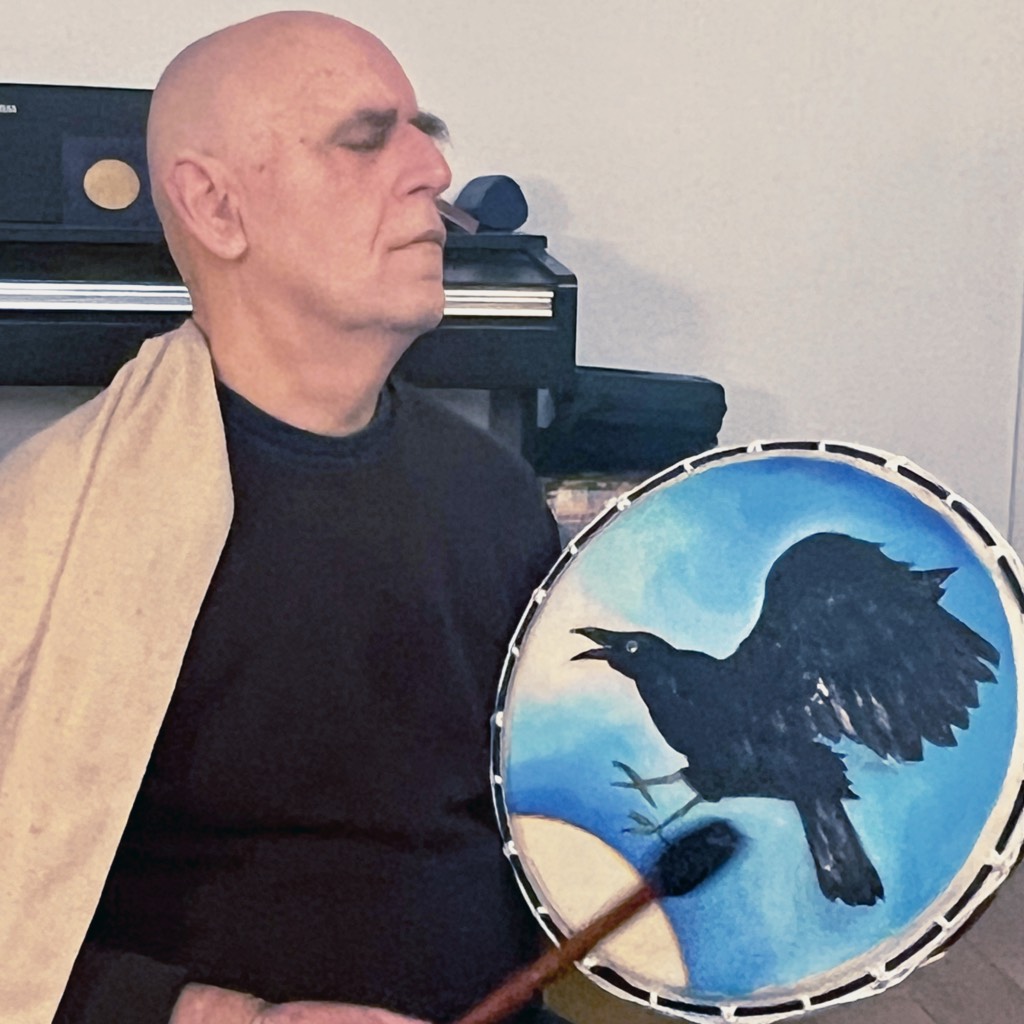
Paramananda is an inspirational and much loved Buddhist teacher who has written a number of books on Buddhism and the craft of meditation, including ‘Change Your Mind’, ‘A Deeper Beauty’, and mostly recently ‘The Myth of Meditation: Restoring Imaginal Ground through Embodied Buddhist Practice’.
He worked for a number of years as a psychiatric social worker and did voluntary work in the community for the Samaritans, in drug detox, and in a hospice. Having co-founded the San Francisco Buddhist Center, Paramananda is now based in West London where is time is dedicated to teaching.
All our events are offered by donation. If you can, donate to allow others who can’t afford it to access these vital Dharma resources when they need them most. Thank you!
Suggested donation:
£175 / $350 AUD / $230 / €205 for the whole retreat, or drop in for £30 / $60 AUD / $40 / €35 per day.
Welcome to the retreat
Day 1
watch the Live PRACTICE sessions
The retreat begins with session to settle and ground us. Paramananda guides us in a body scan that emphasises coming into connection with your breath, your body and the world around you.
After a period of meditation, Paramananda outlines his theme of The River Underground, which refers to something he heard Phillip Glass say in a film about how he composes music. Glass describes the music already being there, like a river underground, you just need to listen to it…
Deep relaxation is key to Paramananda’s approach, and he encourages us to lay down and relax, seeing if we can give our weight to the floor. We then enter another period of meditation to finish the session.
Today’s poem, recited from memory by Paramananda, was excerpted from ‘A Great Wagon’ by Rumi—the famous section “Out Beyond Ideas of Wrongdoing and Rightdoing”.
All the rituals during this Home Retreat are broadcast live from Melbourne Buddhist Centre in Australia. Thanks to all our friends there for making it happen!
We begin with an acknowledgment of the land and the Wurundjeri people of the Kulin nation who are its original people. Viryasiddhi then leads a classic Triratna sevenfold puja, featuring chanting, drumming and mantra, including the Padmasmabhava mantra. This rituial also includes a special sung version of the Green Tara mantra by Rachael Hart, with a dash of Roxy Music!
The session starts with an opportunity for participants to speak with Paramananda about the retreat and say hello to each other.
Paramananda then makes a few general points about posture that we can apply to however we are sitting in meditation. With posture we are essentially working with the relationship between the head and the pelvis. The posture is an ongoing dynamic aspect of meditation: we breathe and relax into our posture and let the body find its alignment and comfort in the world.
By way of Dharma teaching, Paramananda speaks about the relationship between spirit and matter, encouraging us to come into a felt and imaginal relationship with the world. And this gradually becomes a meditation, or perhaps it was a meditation all along! Finally, Paramananda invites us to lay down and relax deeply, with his trademark drumming to help us find that space.
We start the session by noticing how things spontaneously arise in experience. Watch how the senses come forth, our connection to the internal and external. Can we become interested in the sensation before we label it?
A spacious sit follows, during which he offers occasional prompts to deepen awareness of sensations throughout the body.
Day 2
watch the Live PRACTICE sessions
We begin today’s practice with Paramananda referencing the lyrics of Leonard Cohen’s song ‘Bird On The Wire’, as introfduction to a period of meditation moving through the seven energetic centers of the body, starting at the bottom and moving up.
We are then invited to lay down in a restful position, preferably the foetal position. It’s said this position can relax the sense of ego consciousness, a kind of felt memory of being in the womb. And Paramananda lightly drums a heart beat like rhythm in the background to support the exploration.
Following an additional period of Just Sitting practice, the session concludes with Paramananda responding to questions and reflections from participants.
The session starts with a short “arriving mediation”, with the Melbourne Sangha in attendance. This is followed by a puja exploring Tara, the bodhisattva who represents a compassionate embracing of fear.
Referencing Paramananda’s teaching from session one, Bird On The Wire by Leonard Cohen is beautifully sung by Rachael Hart from the Melbourne sangha, along with two Tara mantras.
The session begins with an opportunity to share reflections and ask questions with Paramananda.
After the conversation, Paramananda talks about some of what he considers to the fundamentals of meditation. Meditation isn’t a kind of mind control technique: we meditate with our whole body. Paramananda also recalls the story of the Buddha holding up a flower and Kasyapa experiencing a direct transmission about the nature of reality.
We then moves into a meditation. Paramananda evokes a myriad of images found in the body and the breath, inviting us to notice the subtitles of energy and movement within our breathing.
Paramananda then invites us to lay down whilst he drums and chants the Tibetan medicine Buddha mantra. And the session concludes with a period of just sitting, including David Wagoner’s poem Lost.
The session begins with a period of meditation in which Paramananda speaks about relating to the heart as a perceptual organ. i.e. That there is some capacity for the heart to let the world in.
He talks about being influenced by the Soto Zen tradition where practitioners meditate with their eyes slightly open with the idea that you should never be fully introverted or extroverted.
The session continues with a familiar tempo as Paramananda evokes images found throughout the body, almost like secret teachings. He invites us to pay attention to the continuous unfolding processes happening within us.
We end the day by hearing once more the poem Lost by David Wagoner.
Day 3
watch the Live PRACTICE sessions
Paramananda starts our third day’s practice by reading Federico García Lorca’s ‘Ditty of First Desire’, a poem that voices our yearning to live authentically. He then draws attention to the two traditional strands of Buddhist meditation practice: samatha, the steadying of calm, and vipassanā, the cultivation of insight. Posture, he says, can be an expression of kindness, sustained by the ever-present rhythm of the breath.
A period of seated meditation follows, easing into relaxation with soft drumming as participants lie down. And the session closes with a final period of quiet sitting.
We start our ritual session with another meditation to help us arrive, joining with the wonderful Melbourne Buddhist Centre sangha. Then we move into a puja to the Buddha Akshobhya, the imperturbable blue Buddha of the east.
Today’s ritual includes a 108 recitation of the Akshobhya mantra, a reading from the Thousand Songs of Milarepa recounting one of Milarepa’s meetings with Rechungpa, and another beautiful rendition from Rachael Hart of the song by The Water by Johnny Flynn and Laura Marling.
This session begins with an opportunity for attendees to ask Paramananda questions or share reflections from the retreat so far.
After that is another period of meditation where we again hear Federico García Lorca’s ‘Ditty of First Desire’.
Paramananda invites us to pay attention to the arising and passing away of thoughts and sensation, quoting Guru Rimpoche, Padmasambhava, “Do not reject, do not accept”.
How about we just leave whatever is going on alone? Not to abandon ourselves but rather to abide with whatever is present.
As familiar conclusion to our practice today, meditation is followed by rest and lying down, accompanied by drumming and chanting.
Paramananda begins the final sit of the day by talking about some redwood trees near where he lives, prospering in the centre of west London. How the tree is a fitting image for meditation with its roots burrowing down into the earth, while its branches reach up to the sky.
We gradually move into meditation. Paramananda invites us to become aware of the world around us. How have we interacted with the world today? Reflecting on how we are in the world and how the world is in us.
We then move into a form of body scan, though Paramananda prefers the term ‘listening’ rather than traditional visual terminology.
Day 4
watch the Live PRACTICE sessions
Today we get straight into meditation, following the well-established rhythm of the retreat. Paramananda guides us through the practice, this time evoking images of organic matter like soil and the millions of microorganisms present within our garden soil. This theme evolves to evoke the expansion of our imagination, a sense of awe for world around us.
We then hear Robert Creeley’s poem, ‘If You’.
Following our now familiar routine, we are invited to lay down and relax whilst Paramananda does some drumming and lightly chants the White Tara mantra, as well as the Medicine Buddha mantra.
After this we come back into meditation posture and sit for the remaining 20 minutes. There’s also some extra time at the end to ask Paramananda questions and share reflections.
We start today’s ritual session with an appeal to support Dharmachakra, Paramananda and the Melbourne Buddhist Centre!🙏
We’re live again in the Melbourne shrine room for a puja to Avalokiteshvara, the Bodhisattva of compassion, with Kabir’s poem “I said to this wanting creature inside me” – which brings to life the mythic element running throughout the retreat. This includes the Avalokiteshvara mantra with drumming, which effortlessly makes the link with the retreat’s overall theme of making space to work on ourselves.
A reading of the Mahāsatipaṭṭhāna Sutta: The Great Discourse on the Establishing of Awareness echoes Paramananda’s emphasis on mindfulness of posture as a way of bringing us into awareness. Then a unique blend of two saxophonists from the Melbourne Sangha creates a hauntingly beautiful end to the second session.
The session begins with questions from attendees, including discussion about how we incorporate mettā (loving kindness) into the practice. Is the practice we’ve been doing enough when it comes to wishing others well and working with people we find difficult?
We then move into a period of meditation, this time with a emphasis on the heart. We hear “What the heart is like” – a poem by Miroslav Holub.
Paramananda evokes images of unconditional love, like the love a parent might have for their child, encouraging us to pay attention to that love within us. Can we loosen any views we might have about ourselves as being good or bad?
We then have another period of rest and lying down and drumming. Paramananda once again chants the Medicine Buddha mantra.
In this session we move directly into sitting with Paramananda guiding us in a meditation inspired by the traditional six-element practice. This is based in our usual grounding practice in the body, becoming aware of the breath and the world around us.
Gradually, we call to mind the various elements, starting with earth, followed by fire and water. We then pay attention to the air element, which is followed by space and consciousness.
We then just sit with the effects of the practice.
Day 5
watch the Live PRACTICE sessions
In this gently paced morning sit, Paramananda guides a full-body awareness meditation, inviting participants to “breathe from the soles of the feet to the crown” and sense the legs, pelvis and heart as a rooted, tree-like support. By marrying breath with somatic imagery—earth stability, oceanic rhythm, the skin itself “breathing”—the practice helps softens our ego clinging, opening into a spacious, non-grasping sense of presence.
To frame this experience Paramananda quotes Dōgen Zenji (“To study the self is to forget the self… to forget the self is to be illumined by the myriad things”) and Rumi’s famous meadow verse (“Out beyond ideas of wrongdoing and right-doing…”), illustrating how deep calm (samatha) allows insight to arise without being co-opted by the thinking mind. The session closes with the option of a brief lying-down—a “mini shavasana”— before we head into the day’s rituals and discussions.
We begin the session with a guided meditation to help us arrive, led by Sraddhanaya from the Melbourne Buddhist Centre and soundtracked with the music of Philip Glass, echoing references made by Paramananda. This is followed by an Invocation to Amitabha, the red Buddha of the west.
Today’s ritual is Vessantara’s Puja to Amitabha, with an evocative Amitabha mantra led by Rachael and supported by drumming. Sraddhanaya invites everyone to embody kindness overflowing, represented by Amitabha, through dancing and singing in front of our own shrines while we make offerings—anytime we wish! A reading from Kulananda’s book ‘Teachers of Enlightenment’ reminds us that at the penultimate moment of the Buddha’s Enlightenment journey, the Buddha met Mara with love.
Finally, a reprise of García Lorca’s ‘Ditty of First Desire’ finishes the puja on an aspirational note.
The session begins with an opportunity to ask Paramananda questions and share reflections, including exploring how to work with sadness and whether we can experience joy without having first experienced sorrow.
We then hear ‘Sweetness’, a poem by Steven Dunn, before we move into meditation.
To bring the meditation to an end Paramananda quotes Dogen Zenji’s “The Dharma Body” (dharmakaya).
This session starts with a meditation rooted in body awareness. Paramananda playfully references the traditional seven chakras or ‘subtle energy centres’, going into detail with each one as we progress in awareness up the body.
The session quietens further as we spend time with these energy centres in imaginative awareness. Then we just sit absorbing the effects of five days of practice so far.
Day 6
watch the Live PRACTICE sessions
Today begins with Paramananda introducing the practice of mantra chanting, which can be a really good practice to start the day because it has more active and devotional elements, helping bypass our thinking mind.
We then begin to chant the White Tara mantra 108 times in call and response. Before this Paramananda says a few words to introduce the figure of White Tara, emphasising the fact that she has seven eyes placed around her body.
As with most Buddhist mantra’s as we chant we are calling out the name of the Buddha or Bodhisattva figure, but with the white Tara mantra we are also invoking a long, healthy life, which is somewhat unique to her.
Oṃ Tāre Tuttāre Ture Mama Ayuḥ Punya Jñānā Puśtiṃ Kuru Svāhā
After the 108 recitations of the mantra, we sit for a while in silence, which is then followed by our usual program of lying down to relax whilst Paramananda drums.
The session concludes with a poem by Ryokan, translated by John Stevens:
The rain has stopped, the clouds have drifted away,
and the weather is clear again.
If your heart is pure, then all things in your world are pure.
Abandon this fleeting world, abandon yourself,
Then the moon and flowers will guide you along the way.
After a brief introduction by Viryasiddhi of the Melbourne Buddhist Centre, he begins today’s puja to Padmasambhava by telling the story of Padmasambhava’s taming of the demons and spirits of Tibet, written by Sangharakshita, founder of the Triratna Buddhist Order, in 1972.
It’s a stirring rendition of this particular ritual by Viryasiddhi intended to rouse our spiritual energies. The puja ends with the reverberating sounds of Anthony Vouliotis on saxophone, calling forth deeper energies for the final days of our retreat together.
In this gently spacious session Paramananda begins with a timely reminder to support Dharmachakra, providers of Free Buddhist Audio and The Buddhist Centre Online. He then invites questions before guiding an embodied meditation. Through dialogue with participants he explores how upright posture can cradle “softness,” how mantra alters our very brain-waves, and how imagination and direct felt-sense cooperate in practice. Along the way we hear reflections on evolutionary kinship (from digestive tube to human awareness) and on practising kindness that is both open-hearted and well-grounded in the “guts.”
The guided practice itself moves from sensing the room’s space to rooting in the earth, opening to the sky, and feeling breath as a shared rhythm with the whole planet. Paramananda threads in brief teachings on impermanence, relational being, and the treasure of human consciousness, encouraging us to “relax into what is” beyond the grasp of the conceptual mind.
Readings and references include Dōgen Zenji’s line “To follow the Way is to study the self…,” Rumi’s verses “Out beyond ideas of wrongdoing and right-doing”, and Andrea Gibson’s tender resolve, “I decided I was too soft to last, then I decided to be softer.”
Paramananda wastes no time in getting straight into meditation for this session. We pay attention to the breath and become aware of the legs, seeing if we can let go of any excess energy and tension. We move through the body with awareness and love, being aware that if we loose contact with the breath, we tend to slip into fantasy instead of activating our imaginations.
Paramananda loosely references Alfred Adler, one of the founding fathers of psychoanalysis, exploring how ego structure forms to protect us from some kind of bodily vulnerability or preserved weakness in the body. He encourages us not to take this too literally, rather try to evoke a tenderness and kindness towards our bodies.
We end the session with the poem ‘Anatomy’ by Gilbert Sorrentino
Day 7
watch the Live PRACTICE sessions
The session begin with Zac saying a few words about the retreat and how we might support the work of Dharmachakra, providers of Free Buddhist Audio and The Buddhist Centre Online, going forward.
After that, we hear from Lucy in Melbourne about what they’ve been exploring with the daily rituals for the retreat.
Paramananda speaks about how, when we are practicing meditation, we are trying to come into alignment with impermanence. We are sitting with our deeper experience of things arising and passing away. Unless we actually stop and pay attention to our views and impulses, we are likely to just keep being blown around by them.
He quotes Joseph Campbell referencing W.H. Auden’s idea that “We are lived by powers we pretend to understand”. We then move into meditation, where we hear ‘The Guttural Muse’ by Seamus Heaney.
The season end with a period of rest and drumming.
Broadcast from the Melbourne Buddhist Centre , this evening’s gathering centres on the Bodhichitta Puja—a devotional ritual that evokes the awakening heart-mind for the welfare of all beings. Viriyasiddhi opens with a reminder to support Dharmachakra, then leads the puja: verses of worship, the full Bodhichitta Mantra, traditional offerings, confession, rejoicing and the powerful entreaty to the Buddhas to remain in the world.
Participants at home are invited to make their own shrine offerings while the Melbourne saṅgha enact them on the shrine.
Mid-puja the mood deepens with three creative offerings. Dharmacharini Dhiracharita reads a dramatic episode from The Life of Milarepa—Milarepa’s triple apparition and teaching to his disciple Rechungpa on faith and ego-clinging. Musician Rachael follows with a reflective guitar song, and after the Transference of Merit section of the puja, Lucy closes with a lyrical Tibetan-style “Verses of Meeting and Parting” that likens practitioner and world to sky, river and blossom. Concluding mantras seal the collective aspiration that the bodhichitta—the wish to practice the Dharma so all living beings may come to live in harmony with the way things are and be free of suffering—arises in every heart.
In our penultimate session we chant once again in call and response the White Tara mantra, evoking her rhythmically together 108 times.
Oṃ Tāre Tuttāre Ture Mama Ayuḥ Punya Jñānā Puśtiṃ Kuru Svāhā
We are invited to let the sound and pace settle us, using the mantra as a meditative focus rather than a separate ritual.
During this Paramananda encourages us to experiment with saying our own names where Tāra’s appears, either out loud or internally, with unconditional love as a “self-blessing,” imagining the syllables resonating in the heart with unconditional kindness. We then sit for a while quietly with the effects of this beautiful practice.
After this we are encouraged to rest and lay down whilst Paramananda drums to support a space of deep relaxation.
Basically, just a really chill vibe! 🤘
In this gentle evening sit Paramananda guides practitioners back to basics: sensing the body’s weight on the earth, length through the crown and softness in the face, then letting the out-breath carry away tension and distraction. He weaves practical postural cues—relaxing the psoas (“deep core”) muscle, touching the tongue to the palate (“Magpie Bridge”)—with reflections on imagination, evolutionary kinship with animals, and the Buddhist encouragement to “be a lamp unto yourself.”
The talk invites meditators to taste awareness itself: an open, spacious “Buddha-nature” that remains when conceptual thinking relaxes. Emphasising simplicity and personal responsibility, Paramananda frames practice as re-enchanting our relationship with the world and accessing a natural empathy for all life. No specific poems or texts are recited in this session; the guidance is drawn from traditional Zen and early-Buddhist sayings referenced informally.
Everything we offer is by donation – give today and help us keep it free for everyone!
We hope you find the Home Retreat helpful. We are committed to providing excellent Dharma resources and spaces to connect with community online and go deeper in your practice. And to keeping this free to access for anyone who needs it!
If you can, donate and help us reach more people like you.
Make a regular gift and you’ll be supporting Home Retreats through the years ahead.
Thank you from our team and from the online community around the world!
May you be well!
Suggested donation:
£175 / $350 AUD / $230 / €205 for the whole retreat, or drop in for £30 / $60 AUD / $40 / €35 per day.

Stay connected to community
Subscribe now to get the Triratna Highlights newsletter and we’ll keep you posted by email on new resources as they become available.
If you prefer to get your inspiration on social media, we’ll be there too: connect with us on Instagram, Facebook, Twitter and YouTube.
With deep thanks to Paramananda, Viryasiddhi, Lucy and the Melbourne Buddhist Centre team. And to the Dharmachakra team for their generosity in setting up the conditions for this retreat, as well as leading live events each day.
Event image by Mandarava
Site designed and built by Dharmachakra.