![The Buddhist Centre [Live]](https://thebuddhistcentre.com/stories/toolkit/wp-content/themes/TBCO-Sites/images/logo.png)
EMBODYING FREEDOM
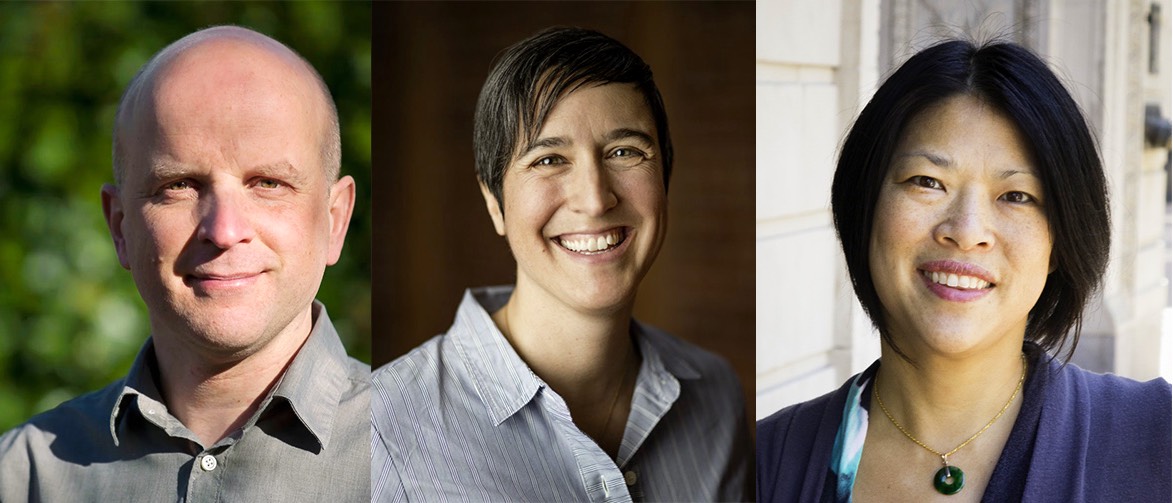
Balajit, Singhashri and Viveka joining forces to offer another wonderful embodied opportunity toward collective liberation Watch practice sessionsDonate and support Home RetreatsWhat is a Home Retreat? (click to read)
Home Retreats can be tailored to your needs.
We provide:
- Live Home Retreat events daily
- Specially curated Dharma resources
- A chance to catch up each day on the event sessions by video if you missed them – so you can do the retreat in your own time
- Share your own inspiration and reflections on the private retreat Padlet space (shared by email)
- A chance to connect with the retreat leader to ask questions about your practice
Whether you have the time to engage with a full-on, urban-retreat style week at home – or are super occupied already with kids or work and just want some useful structure to book-end your days with a little calm and inspiration: this is for you.
The Buddha taught that life includes both suffering AND the potential for liberation. In a world racked with suffering, how do we meet ourselves and each other with curiosity, courage and conviction, for our own benefit and the benefit of all beings?
Explore what liberation feels like through an embodied and relational approach to meditation. We’ll get familiar with moment-by-moment experiences of both tension, stuckness, and resistance AND release, softness, and openness, as well as the different parts of ourselves showing up through these experiences.
Collectively we’ll get curious about:
-
What supports a sense of safety, dignity, and belonging in the body and helps with nervous system regulation
-
Our vision for liberation for ourselves and others and our intentions for practicing
-
How our unique social conditioning shows up in our practice and how we relate to what’s happening now
-
Embodiment as a radical act
-
The role of beauty and joy in opening to ourselves, one another and the world
-
How a creative response to fear, grief, shame and anger can support our efforts towards collective liberation
-
How to deepen into a direct experience of the impermanent, insubstantial nature of experience as a gateway into qualities of the awakened mind
-
The co-created and interconnected nature of experience and reality
Through teacher input, guided meditations, individual and group reflections, mindful movement, neurosensory exercises, chanting and ritual.
All our events are offered by donation. If you can, donate to allow others who can’t afford it to access these vital Dharma resources when they need them most. Thank you!
Suggested donation:
£175 / $230 / €205 for the whole retreat, or drop in for £30 / $40 / €35 per day.
Welcome to the retreat
Day 1
watch the Live PRACTICE sessions
Welcome to a full intrdouctory session with Singhashri and Balajit to set the shape and tone of the retreat and unpack its connection to freedom in the body and the heart-mind.
After some grounding, arriving work we look at community agreements for the retreat as well as exploring what each of us might need to participate well. Then we get a deeper evocation of the retreat theme and a chance, of course, just to sit still, take it all in, and prepare ourselves for practice.
After a brief introduction to today’s final session, Singahshri leads us into a simple, beautiful ritual. We begin with a short reflective meditation, then hear a wonderful reading by Martha Graham on vitality quickening into action and unique expression.
There’s also the opportunity to move or be still as we listen to the chanting of the Shakyamuni mantra, which in turn leads into a final quiet meditation in which we hold our intentions for the retreat and offer them up.
Day 2
watch the Live PRACTICE sessions
Singhashri opens with an arriving practice and sets the day’s theme as “embodying safety, dignity, and belonging,” naming grounding as a thread running through the beginning, middle, and end of the session. She reads a short Rumi poem (“The breeze at dawn has secrets to tell… Don’t go back to sleep”) and uses it to frame practice as waking up to what we most deeply need, then links these human needs with Buddhist refuge: the Dharma as a “raft” carrying us from the dangers of saṃsāra toward the safety of Nirvāṇa. Another Rumi poem, Bird Wings, is mentioned as a further touchstone.
A guided reflection follows, inviting people to recall a time they felt even a little safe, dignified, and as if they belonged, then to journal on the conditions that supported that felt sense and what it reveals for practice going forward. The session ends with Balajit leading a body scan to deepen embodied settling and resource a steadier sense of safety in the nervous system.
In this session, Viveka welcomes everyone and leads an arriving sit exploring safety in the body with the question: “What helps my body remember or generate safety?” She then invites people to feed back on their experiences. From here she speaks about how the body can store life experiences and how we can work with that within our practice movingly drawing on her own life experiences making links with wider issues such as xenophobia, racism, and our relationship to the planet.
There is also an invitation to discuss the following questions: Where might you cultivate safety and a sense of safety in your life? How do we become bodies that generate safety inside us and around us? How can we generate fearlessness from this place?
To finish everyone returns to the main space to sit with their experiences, with some final comments on the theme by Viveka. Including a heartfelt appreciation the Bad Bunny Superbowl Halftime Show and its central message of love being stronger than hate!
In this session, Viveka begins by leading us in an opening, grounding exercise – with some excellent, soothing, self-massage tips! She then invites us to offer reflections on what has come up for us on the retreat to this point. Five individuals share their reflections, and Viveka offers her thoughts on the practice that emerges.
Viveka then leads a meditation, beginning with an introduction that connects the participants’ reflections to the key instructions in the meditation (Settling, Allowing, Familiarizing, Everything as it is).
Following the meditation, we listen to a beautiful Shakyamuni Mantra (as performed by a choir, composed by Mahasuka). and are encouraged to make and share any offerings we feel moved to make.
Day 3
watch the Live PRACTICE sessions
Balajit invites a short reflection on connection: bringing to mind a recent moment of good communication with another person or a group, noticing what made it feel connecting (e.g., being listened to, warmth, ease), and briefly sharing these qualities. He frames them as “sangha-building” energies that can also be brought into relationship with one’s own inner life.
Balajit then guides a longer sit structured around Lama Govinda’s dimensions of embodiment (as received in Triratna through Sangharakshita): settling into the physical body as weight, shape, and contact with the ground; sensing the energetic dimension (including awareness in the palms and the subtle “energy body”); noticing the mental body of thoughts and images; meeting emotional “weather” in belly and chest without getting lost in it; and opening to the “spiritual body” as sky-like spaciousness, stillness, peace, and possible joy. The meditation repeatedly drops in the earlier connection-qualities—presence, openness, authenticity, non-judgement—as supports for deeper embodied ease.
Viveka begins the session with a short somatic practice exploring the link between the voice and the central energy channel in the body. She then explores how modern culture can resist acknowledging suffering as a form of protection and how, from a Buddhist perspective, suffering acknowledged can be a path of liberation through progressive stages of awakening: suffering – faith – joy – rapture – tranquility – happiness.
Viveka links this to how letting the whole of experience in can open us to beauty. This was beautifully illustrated by the story behind Alysa Liu winning her gold medal at the Olympics for figure skating, embodying ease, joy, and free-flow.
There’s also the chance to explore the following questions:
- What is your own relationship to/practice of beauty and joy?
- What is it to practice joy in our world just now? What does this bring up for you?
- What brings you joy?
She ends on an embodied encouragement to live in the flow as much as we can.
Today’s closing session begins with a burst of laughing yoga – followed by some moving, personal sharing from friends on retreat finding their voices and exploring with Viveka how to embody freedom in the here and now. A great session packed with little moments of insight to ponder.
Viveka then shares the poem, ‘Eagle Poem’ by Joy Harjo as a starting point for further reflection as we move into an extended meditation, opening into awareness. And we finish by listening in the space to Viveka singing a hymn to Machig Labdrön, and playing a personal recording of the Vajrayogini mantra, with an invitation to inhabit our freedom and connect with beauty:
OM Machig Ma La Solwa Deb
AH Machig Ma La Solwa Deb
HUNG Machig Ma La Solwa Deb
Karpo OM Gyi Jingyi Lob
Marpo AH Gyi Jingyi Lob
Ngong Po HUNG Gyi Jingyi Lob
Ku Sung Thug Gyi Jing Chen Phob
Ma Yum Chen Go Phang Tob Par Shog
PHAT!
Mother Machig, please hear my request!
The white OM empowers me with your blessing
The red AH empowers me with your blessing
The blue HUNG empowers with your blessing
Your body, speech and mind greatly empower me
O Great Mother, may I gain your realisation!
PHAT!
Day 4
watch the Live PRACTICE sessions
Balajit opens with an arriving practice, checking in with breath, mood, and energy, and settling into the support of the body and ground. Singhashri follows with a longer meditation that “pulls together” the retreat’s themes in lived practice: establishing enough steadiness to feel into the body, noticing the dynamic of opening and contracting, and using a few slightly deeper breaths (and sound on the out-breath) to drop into contact, stillness, and a whole-body sensitivity. Awareness then broadens to include breath, sensations, sounds, and the ground, with repeated permission to begin again whenever the mind wanders.
In the second half, Singhashri introduces the theme of unique social conditioning—how it shapes what feels safe or unsafe, and how it shows up in meditation and relationship—framing the inquiry with the question “what shaped you?” She offers a worksheet from her book to support reflection, then closes with a short “blessings” practice, explicitly titrating back toward resource and steadiness. An opening shared audio thread—“We keep by the ones who circle round to attend these fires…”—sets the tone of companionship, courage, and change.
This session opens with an audio reflection—“what a glorious world… if everybody in the world love everybody in the world”—and then turns to the theme of conditioning as both a challenge and a source of connection. Singhashri frames the inquiry “what shaped you?” through Sangharakshita’s emphasis that the Dharma is a path each person has to walk in their own way, referencing What is the Dharma? and The Path as Symbol (also collected in The Essential Sangharakshita). The reflection widens to include ancestral, cultural, historical, and economic conditioning, inviting a stance that neither idealises nor condemns what has shaped us, and remains open to being “blessed” by what has supported us.
Balajit and Viveka then model the inquiry through personal storytelling. Balajit traces his shaping through family history and the long after-effects of the Second World War—evacuation, London wartime stories, and the “overspill” estates that formed his childhood—showing how collective trauma leaves bodily and cultural traces. Viveka speaks as the child of Chinese immigrants, naming both the stability and pressures of diaspora survival imperatives, and links later social-justice formation to lived experience in West Philadelphia, anti-apartheid activism, and a film about Stephen Biko, articulating a felt belonging with those who have been “unbelonged” and a practice of solidarity across communities.
The session opens inviting us to pause and reflect on “what shapes us” and how practice meets our conditioning. It begins with a few minutes of mindful movement to loosen the joints (including simple rotations through wrists and arms), before moving into a short chant of the Amitābha mantra and a brief sit.
After a short break, the session closes with a longer lying-down meditation: the Amitābha mantra leads into a grounding body scan, starting with the “back plane” of the body in contact with the earth, then moving through mouth and face, ears, shoulders, arms, hands and fingers, legs and feet, pelvis, belly, and chest/heart. Awareness widens to the whole body as a living field of sensation—supported by ground and breath—followed by a few minutes of simply resting in presence, ending with a bell and a gentle orientation to the next day’s silent practice.
Day 5
watch the Live PRACTICE sessions
Balajit opens the session by marking the day as a more meditative one—extended silence and sitting “peppered by readings”—and leads an arriving practice to settle into the body.
He introduces a simple nervous-system settling technique (credited to Stanley Rosenberg’s writing on the vagus nerve), then sets the context of a Zen-style sesshin: an uninterrupted, structured period of practice alternating seated meditation and mindful walking/movement.
Then the practice moves through the sesshin rhythm—sitting, walking, sitting, walking, and a period of lying-down meditation—returning repeatedly to kindness, embodied presence, and coming back from thought-vortices into the senses. Further short readings frame later sits, including meditation instructions from Tilopa (“Neither giving nor taking… leave your mind at rest”) and a closing Tilopa passage on leaving mental activity “just as it is” so consciousness releases into its nature.
Viveka opens the session with gentle qigong-style joint-opening and grounding movement: softening into the feet and earth, circling head, shoulders, wrists and hips, swaying, and then working with breath along the central channel and humming to enliven energy and flow. From there, the session settles into meditation, with repeated invitations to feel support from the ground, soften the “grimace,” and let stability, interconnection, and embodied ease be received rather than forced.
Throughout the practice, Viveka weaves in passages from Thich Nhat Hanh’s Earth Touching, using the poem as a field of mettā and remembrance: “Come back to the here,” “Sustain the mudra of earth touching,” and “Walk as if you were kissing the earth with your feet.” The meditation unfolds in silence and changing postures—sitting, lying down, or walking—as participants are invited to keep returning to mindful breathing, the touch of the earth, and the patient path that is “always waiting” for us to come back.
The session opens with an arriving practice of self-holding, rocking, humming, and gentle movement, allowing the nervous system to settle and the body to feel more supported. This leads into a sesshin-style rhythm for the last session of the day: a 20-minute meditation, a period of mindful walking or movement, another meditation, and a brief mindful leg stretch. The guidance invites a softer, less effortful way of practising, drawing on Viveka’s SAFE approach—settling, allowing, familiarising, and emptiness—and encouraging people to rest back into direct experience, letting what arises in the senses come and go.
Two readings frame the practice. First comes a passage from the Purabheda Sutta describing “a person who is calmed,” free from craving and attachment. Later, a sequence from Vishvapani’s Gautama Buddha gathers phrases the Buddha used for liberation—“the harbor of refuge,” “the island amidst the floods,” “the tranquil,” “the home of ease,” and others—offered slowly as contemplative pointers. The session closes with the Green Tara mantra and the Transference of Merit and Self-Surrender.
Day 6
watch the Live PRACTICE sessions
The session opens with a somatic grounding exercise led by Balajit. Singhashri explores the difference between emotions and kleśas, reflecting on grief, anger, shame, and fear as energies that can be met without turning into hatred or suppression. She references stories from the Pāli Canon, recommends Sangharakshita’s Know Your Mind, and welcomes reminders of Pema Chödrön’s When Things Fall Apart.
The session closes with Singhashri’s PEACE meditation—developed while writing for Lion’s Roar and described as her own version of the first and last stages of karuṇābhāvanā—guiding participants through pause, grounding in earth, acknowledging suffering, bringing compassion, and opening into a wider, kinder holding of what is here. We also hear the Padmasambhava mantra to conclude the session.
Balajit continues the retreat’s exploration of difficult emotion with teaching on “loving release and resistance,” beginning with an arriving practice of listening, looking, and sensing the body’s contact with support, and briefly evoking the Bāhiya Sutta’s “in the seen, just the seen; in the heard, just the heard.” He reflects on the qualities that arise when experience is allowed to be—peace, spaciousness, relief, stillness, freedom—and then turns toward what happens when unresolved material surfaces in meditation. Drawing on Sangharakshita, Thich Nhat Hanh, Reginald Ray, Sharon Salzberg, Jack Kornfield, and Tara Brach, he frames tension not as a mistake to get rid of but as part of the body’s holding process: something that can be met with patience, kindness, and increasing capacity.
A guided meditation then explores this directly. Balajit invites attention to areas of bracing or contraction in the body, sensing their shape, texture, heat, density, and edges, while noticing any secondary resistance to the tension itself. Rather than trying to relax or fix anything, the practice cultivates equanimity around tension, then widens back to the whole body so that tension is held within a larger field of awareness. From there, resources are brought in—the support of the ground, the wider feeling body, visual contact with the room, or birdsong—so that tension and support can be felt together. The session closes with inquiry into how this work lands in practice, including reflections on nausea, tension, dysregulation, and the need to balance staying present with resourcing and self-care.
Viveka opens the session gathering personal reflections into a wider teaching on practice as learning to be with life without drowning in it. Viveka speaks about not bypassing experience, using the image of “beach balls” held under water to explore how emotions, memories, and social conditioning keep resurfacing, and invites a more spacious view in which experience is not simply “mine” but part of a larger river of life. Along the way, she references the Dalai Lama’s advice to “check every ten years” if you want to know how meditation is going, as a reminder to trust the long arc of practice.
The practice then turns toward embodiment and discernment, inviting participants to feel what a healthy yes, a healthy no, and a healthy maybe are like in the body, and to distinguish these from compliance, aversion, or confusion. A further guided exercise works with greed, hatred, or delusion as energetic patterns rather than fixed identities, using a fireworks display as a way of sensing these energies arising and dissolving within a larger space of awareness. The session closes with Padmasambhava as a figure of transformation, drawing on Sangharakshita’s description of him as “the magician, the transformer,” and listening to a Padmasambhava mantra introduced with a text by Vishvapani that invokes vajra-like courage, love, and compassionate activity.
Day 7
watch the Live PRACTICE sessions
After a short grounding exercise led by Singashri, Balajit picks up the previous evening’s firework display as an image for impermanence and insubstantiality, describing all six senses as an ongoing “firework display” of arising and passing experience. He links this with the Kaccānagotta Sutta, using the Buddha’s teaching on the middle way beyond clinging to existence or non-existence to frame the retreat’s exploration of form and emptiness, and to show how deepening mindfulness can reveal the fleeting, conditioned nature of what we take to be solid.
The session then turns toward the heart. Balajit introduces the Karaṇīya Mettā Sutta and uses it as the basis for a guided mettābhāvanā: receiving a golden light of wisdom and compassion, then extending that blessing to a good friend, a neutral person, a difficult person, and finally all beings. The inquiry afterwards stays close to lived experience, exploring how sensory openness, emotional sensitivity, safety, and clinging interact, and how compassion practice can help what is held tightly begin to soften and fall away.
To begin our penultimate session we do an arriving exercise around the breath and making mantric sound, with an element of play too.
As an aspect of reviewing the retreat, we explore what supports a sense of safety, dignity, and belonging in the body – and helps with nervous system regulation. Asking, what our vision is for liberation for ourselves and others as reflected in our intentions for practicing,
One way is to look at deeper working with conditionality, remembering the role of beauty and joy in opening to ourselves, one another and the world. And how our unique social conditioning shows up in our practice, and relates to what’s happening now.
We can then connect with how a creative response to fear, grief, shame and anger can support our efforts towards collective liberation.
Finally, we also engage with the Insight dimension of practice. How to deepen into a direct experience of the impermanent, insubstantial nature of experience as a gateway into qualities of the awakened mind. How to let in a co-created and interconnected nature of experience and reality.
It’s almost the end of the retreat! And among some sadness at saying goodbye, much love and delight in the practice of sitting with a loving community.
After an arriving execrise with gentle physical engagement with our heads to help us settle, we hear a moving poem by Rohini, one of the early Buddhist nuns, beginning and closing our final meditation together.
Viveka then leads a strong ending ritual for the retreat, inspired by the example of Machig Labdron:
Machig Labdron said to her teacher:
I want to wake up, because I want to alleviate suffering in this world….
What should I do? Her teacher gave her the following instruction:
1) Confess your hidden faults
2) Approach what you find repulsive
3) Help those you think you cannot help
4) Anything you are attached to, give that/let it go
5) Go to places that scare you.
With a beautiful recording of the Green Tara mantra ringing in our ears, we take our leave of each other in a spirit of forgiveness for anything that has intefered with harmony on the retreat – and joy in all that has made it such a remarkable week of practice! Dedicating our merit for the benefit of all.
Everything we offer is by donation – give today and help us keep it free for everyone!
We hope you find the Home Retreat helpful. We are committed to providing excellent Dharma resources and spaces to connect with community online and go deeper in your practice. And to keeping this free to access for anyone who needs it! If you can, donate and help us reach more people like you.
Make a regular gift and you’ll be supporting Home Retreats through the years ahead.
Thank you from our team and from the online community around the world!
May you be well!
Suggested donation:
£175 / $230 / €205 for the whole retreat, or drop in for £30 / $40 / €35 per day.
Donate online with PayPal

Donate directly with credit or debit card
Other donation methods
If you would like to donate with another payment method (standing order, cheque, bank transfer, etc), please get in touch.
Stay connected to community
Subscribe now to get the Triratna Highlights newsletter and we’ll keep you posted by email on new resources as they become available.
If you prefer to get your inspiration on social media, we’ll be there too: connect with us on Instagram, Facebook, Twitter and YouTube.
With deep thanks to Balajit, Singhashri, Viveka and and the Dharmachakra team for their generosity in setting up the conditions for this retreat, as well as leading live events each day.
Event main images by Fellipe Ditadi and Nick Fancher
Site designed and built by Dharmachakra.