![The Buddhist Centre [Live]](https://thebuddhistcentre.com/stories/toolkit/wp-content/themes/TBCO-Sites/images/logo.png)
POINTING TO THE MOON OF NON-SEPARATION
A weekend exploring suññatā as non-separation with Tejananda Watch practice sessionsDonate and support Home RetreatsWhat is a Home Retreat? (click to read)
Home Retreats can be tailored to your needs.
We provide:
- Live Home Retreat events daily
- Specially curated Dharma resources
- A chance to catch up each day on the event sessions by video if you missed them – so you can do the retreat in your own time
- Share your own inspiration and reflections on the private retreat Padlet space (shared by email)
- A chance to connect with the retreat leader to ask questions about your practice
Whether you have the time to engage with a full-on, urban-retreat style week at home – or are super occupied already with kids or work and just want some useful structure to book-end your days with a little calm and inspiration: this is for you.
In our online retreat earlier in the year, the ‘moon’ to which I was pointing was the unfindability of a separate self. The kind of self that we think we are – persisting, potentially satisfactory and somehow ‘who and what I really am’ – is nothing but a mental fabrication. Our fabricating of this leads to suffering.
This weekend retreat explores the other ‘side’ of the equation: if there is ‘self’, there must be a separate ‘other’. And indeed, the sense of separation is a further, deep cause of unnecessary suffering.
Our nature is, in reality, whole and undivided. This non-separation is what we will be exploring, by becoming inquisitive about the question: what is the actual nature of our immediate sense experience?
It is not what we think.
These explorations stand in their own right and people who were not on the earlier retreat are welcome.
All our events are offered by donation. If you can, donate to allow others who can’t afford it to access these vital Dharma resources when they need them most. Thank you!
Suggested donation:
£90-50 | $120-65 | €105-60
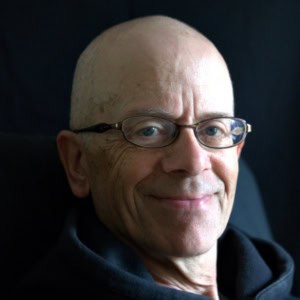
Welcome to the retreat
Day 1
watch the Live PRACTICE sessions
Tejananda begins the retreat by placing the theme of ‘non-seperation’ within Sangharakshita’s fivefold system of practice (integration, positive emotion, spiritual death, spiritual rebirth, receptivity). The emphasis is on embodiment as the entry point for insight.
We then practise a sustained, guided settling: arriving in posture, relaxing through head, neck, shoulders, torso and hands, and opening to immediate sensations without censorship. Attention rests with felt experience—including first-contact sensations of the in-breath—while noticing how experience reveals itself rather than being managed. We end with brief reflections and questions on “just sitting,” the relation to jhāna and positive emotion, and how embodied awareness supports seeing through separation.
We open by chanting the Green Tara mantra—invoking Tara as active compassion—then take a short reading from Dilgo Khyentse Rinpoche on the “deluded mind,” noticing thoughts as insubstantial as rainbow light in crystal and recognizing their void nature as they arise.
We then practise a guided, embodied settling: establish posture, scan for tension, widen awareness through the whole body, and include the natural movement of the breath as an anchor. The emphasis stays on non-preference and direct sensing—letting compassion remain implicit while awareness meets sensations and thinking as they come and go—before closing with brief reflections and small breakout groups.
We open by framing the theme through direct experience of the body: how “self” identifies with body or mind, and how “matter” is a concept rather than something findable—illustrated with a quotation from Sangharakshita and a nod to the Heart Sutra on form. We distinguish the imagined “physical body” from the immediate sensate/energy body and note how vedanā is conceptually added to raw sensation. An exercise from Sangharakshita’s The Essence of Zen invites feeling the hand without touch to reveal sensation prior to concept.
We then do a guided exploration of the “sensate cloud”: drop attention out of the head, open to the whole field of vibration (from fine tingling to coarse, painful waves), notice space with no fixed edges, and test whether experience conforms to the mind’s visual image of the body (e.g., the face). Short sharing follows, including a remark (via Ratnaghosha) that imagination can be “the gateway to reality,” linking the practice to shifts in perception and non-separation.
Day 2
watch the Live PRACTICE sessions
The session begins with Tejananda answering questions from the Padlet and participants. The practice focuses on distinguishing direct bodily sensation from mental imagery around the breath, then examining the sequence from contact through feeling (vedanā) toward grasping—returning to the “gap” by staying with the feeling tone rather than following thoughts. Guidance keeps the emphasis on embodied awareness and gentle steadiness.
We extend the inquiry to experiences of weight and “weightlessness,” and how the mind insists on its interpretations. A tip from Bodhipaksa’s brahmavihāra teaching—keeping “soft, kindly eyes,” especially with difficulty—anchors the approach. Tejanana quotes from Guy Armstrong’s Emptiness and a study where people chose mild electric shocks rather than sit with their thoughts, which underline why restlessness arises and how the practice meets it. We end by reinforcing simple, kind awareness and staying with vedanā as it changes.
We set Amitābha as the focus for the session, chant a short mantra, then settle: checking posture, softening tensions, and opening the heart with kindness and compassion. The guided practice moves briefly into just sitting, attending to how thoughts and sensations show up without pushing or pulling.
We then read Dilgo Khyentse Rinpoche’s “Thoughts and the Mind,” using its images of rainbow and mirage to clarify that thoughts are empty and that appearance and voidness are one—niṣprapañca as freedom from conceptual elaboration. From there, we examine dependent origination at the contact → vedanā (“feeling-tone”) → craving → clinging sequence, training to remain with vedanā in the “gap” rather than spiralling into proliferation, supporting equanimity and the theme of non-separation.
We open by responding to Padlet questions, reading a participant’s reflection on boundaries and non-separation. A short teaching links dukkha and śraddhā—following Sangharakshita’s line that faith is the positive counterpart of grief—and points to “the gap” around vedanā as the place to stay with discomfort rather than react.
We then practise: first evoking a flowing undercurrent of love and compassion, letting it recede, and moving into just sitting. Attention rests with posture, relaxation, and the mind–body field, noticing “I/me/mine” thoughts and inquiring into borders in experience—what any sensed boundary actually consists of. An earlier reading from Dilgo Khyentse Rinpoche on the insubstantiality of thoughts is recalled to support meeting emotion and thought as changing, empty appearances.
Day 3
watch the Live PRACTICE sessions
We start this concluding day by examining our experience in meditation, followed by some sharing around this. In the first sit, we observe the ‘sensate cloud’ of our physical experience, to find that it is boundariless and that our sense of hearing arises in the same space of consciousness. We look at the constantly vibrating nature of all sensation.
In the second meditation we continue this theme to include the visual, smell and taste sensations, noticing that the entire sensory field is boundariless and arises in the same space of consciousness. We reflect on the search for the ‘I’ in all of this…
We continue on our final day with a session reflecting and meditating on a terma text from Guru Padmasambhava pointing out the actual nature of things. A simple and powerful practice as the retreat blossoms into its own fullness like the moon.
And before that, a chance to hear some reflections and questions on the day’s work so far.
We begin the closing session with a guided meditation that encapsulates all that’s good in Tejananda’s approach – bringing a spacious, open mind and an attitude of easy inhabiting and easy letting go to our experience, with a background sense of kindness rooted in the body. His invitation in playfully exploring how we make identity in relation to the sense fields is to move from an awareness of ther various inputs arising in awareness to a sense of how these all constellate in an “undivided” way; whether that’s as energetic somatic sensation, as a sense of boundarilessness, or as any conscious moment of particular awareness flowing into the next. Just sitting with all of this is its own reward.
After some final sharing from a grateful set of meditators, we close with an invitation to just sit with whatever seems timeless or unaging in our experience of consciousness. And we hear a few last perspectives from Padmasambhava and Dogen, who recommends we “take the backwards step” into this reality. A lovely restful end to this deep dive of a short retreat!
Everything we offer is by donation – give today and help us keep it free for everyone!
We hope you find the Home Retreat helpful. We are committed to providing excellent Dharma resources and spaces to connect with community online and go deeper in your practice. And to keeping this free to access for anyone who needs it! If you can, donate and help us reach more people like you.
Make a regular gift and you’ll be supporting Home Retreats through the years ahead.
Thank you from our team and from the online community around the world!
May you be well!
Suggested donation:
£90-50 | $120-65 | €105-60
Donate online with PayPal

Donate directly with credit or debit card
Other donation methods
If you would like to donate with another payment method (standing order, cheque, bank transfer, etc), please get in touch.
Stay connected to community
Subscribe now to get the Triratna Highlights newsletter and we’ll keep you posted by email on new resources as they become available.
If you prefer to get your inspiration on social media, we’ll be there too: connect with us on Instagram, Facebook, Twitter and YouTube.
With deep thanks to Tejananda and the Dharmachakra team for their generosity in setting up the conditions for this retreat, as well as leading live events each day.
Site designed and built by Dharmachakra.